Agape Children's Ministry Trip 2010

Thursday, November 25, 2010

Exposing the human rights facade

Exposing the human rights facade: "


By G. STEINBERG The Jerusalem Post OpEd November 25 2010

http://www.jpost.com/Opinion/Op-EdContributors/Article.aspx?id=196659


The people and institutions that claim to uphold human rights and democracy

are in fact nullifying these core moral principles.At 87, Robert Bernstein,

founder of Human Rights Watch, began his second life. Thirty- three years

after he founded Helsinki Watch in 1976, which evolved into HRW and became

one of the most influential human rights organizations in the world, he

disowned his earlier creation. In October 2009, in an explosive column

published in The New York Times, Bernstein denounced HRW and its leaders for

distorting and exploiting human rights to attack democracies, and for

playing a central role in turning Israel into a “pariah state.”


Now, Bernstein has gone further in working to reverse the moral failures of

HRW and the wider network of highly politicized groups that use the façade

of human rights to attack moral principles. Delivering the Goldstein Lecture

on Human Rights at the University of Nebraska at Omaha [published in full on

page 13 of today’s Jerusalem Post], he contrasted Israel’s democratic values

with their notable absence in the Arab regimes and Iran. But most of HRW’s

human rights accusations are directed at Israel. Bernstein demonstrated that

these “human rights organizations, including the one I founded,” as well

Amnesty International, the Carter Center and other groups, are leading the

political war against Israel by working closely with corrupt UN frameworks.


His involvement in free speech grew out of his background as a book

publisher. In the 1970s, he went to the Soviet Union to negotiate copyright

issues, and met the dissident scientist Andrei Sakharov and his wife, Yelena

Bonner. Bernstein encouraged Sakharov to write an autobiography, and

provided support as he came under increasing harassment, including exile to

Gorky. (Natan Sharansky was jailed and sent to the gulag for his work with

Sakharov.) The Soviet regime revoked Bernstein’s visa in a failed attempt to

end this support.


This was the beginning of Helsinki Watch, which grew into HRW.


After the Cold War, Bernstein turned his attention to human rights issues in

China, leaving HRW in the hands of cynical leaders who played a leading role

in exploiting human rights principles to attack Israel. As the assault grew,

amid the carnage of Palestinian terror bombings that killed more than 1,200

Israelis, Bernstein returned to an active role, joining HRW’s Middle East

North Africa Advisory Board and observing its cynical manipulation of moral

rhetoric.


He quickly noted the close cooperation between HRW and the UN Human Rights

Council, which was “so critical of Israel that any fair-minded person would

disqualify them from participating in attempts to settle issues involving

Israel.” The UNHRC sought out “prominent Jews known for their anti-Israel

views,” such as Richard Falk. (Falk had written an article comparing Israel’s

treatment of Palestinians to Hitler’s treatment of Jews in the Holocaust.)

When Israel objected, HRW “leaped to his defense, putting out a press

release comparing Israel with North Korea and Burma in not cooperating with

the UN.”


The text defending Falk was written by Joe Stork, deputy director of HRW’s

Middle East Division. As Bernstein reminds us, Stork had been an editor of a

notorious pro-Palestinian newsletter before being hired by HRW.


Most of HRW’s accusations against Israel were not based on the 1948

Universal Declaration of Human Rights but on subjective interpretations of

the laws of war, the Geneva Conventions and international humanitarian law.

But HRW has “little expertise about modern asymmetrical war.” Noting that

Israel was responding to terror attacks from Iran’s non-state proxies –

Hizbullah and Hamas – Bernstein relates the ways in which HRW’s reporting on

this conflict consistently “faulted Israel as the principal offender.”


At first, Bernstein, like most journalists, diplomats and academics, was

“inclined to believe what Human Rights Watch was reporting.


However, as I saw Human Rights Watch’s attacks on almost every issue become

more and more hostile, I wondered if their new focus on war was accurate.”


THE BLOW that led a reluctant Bernstein to break publicly with his

organization was HRW’s central role in promoting Richard Goldstone – one of

executive director Kenneth Roth’s closest allies and an HRW board member –

to lead the UN’s assault following the Gaza war.


“Human Rights Watch has been by far the biggest supporter” of this campaign

to “bring war crimes allegations against Israel – based on [Goldstone’s]

report.”


As Bernstein observed, HRW has ignored “many responsible analyses

challenging the war crimes accusations made by Goldstone,” as well as

detailed refutations of HRW’s own reports, which were filled with

unverifiable and false claims.


Referring to the unresolved Marc Garlasco affair, Bernstein noted that “a

military expert working for Human Rights Watch who seemed to wish to contest

these reports was dismissed and... is under a gag order. This is

antithetical to the transparency that Human Rights Watch asks of others.”


And he recalled that when HRW’s Sarah Leah Whitson went to Saudi Arabia in

2009 to raise funds by selling its support for Goldstone’s attacks on

Israel, it is doubtful that she discussed textbooks published by the Saudis

calling Jews “apes and pigs.”


Bernstein’s painful accounting regarding the organization he founded has of

course been summarily rejected by this corrupt humanrights priesthood and

its acolytes. As a result, the people and institutions that claim to uphold

human rights and democracy are in fact accelerating the tragic destruction

of these core moral principles.

===============

The writer heads NGO Monitor (www.ngomonitor.org) and is professor of

political science at Bar-Ilan University.

"

Monday, November 22, 2010

DIDN’T WE USED TO BE ON THE SAME SIDE?

DIDN’T WE USED TO BE ON THE SAME SIDE?: "

DIDN’T WE USE TO BE ON THE SAME SIDE?

By David Horovitz (Jerusalem Post)


Before we can even get to grips with the complexities of dealing with the Palestinians, we need to remember the story, often repeated, that shows a Rabin so focused on the important things of life, so “utterly without pretense” as Clinton put it, that he never quite came to terms with this merely decorative article of clothing – a black tie!


“True to form, two weeks before his assassination,” Clinton wrote of Rabin, “he arrived in Washington at a black-tie event without the black tie. We borrowed one for him, and I still smile whenever I think about straightening it for him…”


The affection with which he retells the tie story is emblematic of Clinton’s tone in all of his writings and musings on Rabin. The president quite plainly adored our late Prime Minister – admired him, respected him, empathized with him, regarded him as a role model. As he wrote in the Times, loved him.


There is nothing comparably affectionate in George W. Bush’s new memoir about Ariel Sharon – the Prime Minister with whom Clinton’s presidential successor worked for crucial periods. But there is evidence of respect, admiration and a meeting of minds.


Bush recalls his first visit to Israel in 1998, and the helicopter tour he took with Sharon – “a bull of a man… who had served in all of Israel’s wars.” Sharon’s proud, “gruff” airborne commentary that day, his familiarity with “every inch of the land,” his observation that “Here our country was only nine miles wide,” undoubtedly shaped some of the then-Texas governor’s fundamental thinking on the Israeli-Palestinian conflict. The tour with Sharon, which constituted his “most striking memory” of that debut trip to the Holy Land, left Bush, as he writes, “struck by Israel’s vulnerability in a hostile neighborhood.”


Tellingly, too, Bush notes, it is with Sharon he speaks by telephone immediately before his first post-September 11 cabinet meeting – “a leader who understood what it meant to fight terror.”


Recognizing the personal and professional dimensions of these relationships between recent American Presidents and Israeli Prime Ministers serves, bitterly, to underline how strikingly the climate – and, one fears, the essence – of our bilateral ties has chilled of late. The Clinton-Rabin alliance and, albeit to a much lesser personal extent, the Bush-Sharon interaction, were true partnerships in which all manner of fundamental shared values and interests were safely assumed, and served as the basis from which heartfelt mutual concern and commitment flowed. These were leadership pairings of profound trust, and of profound benefit to both countries.


Today, there is little echo of these personal meetings of minds to be found in the relationship between President Barack Obama and Prime Minister Binyamin Netanyahu. The notion that they loathe each other is almost certainly incorrect. For a start, loathing would require a passion it is unlikely either can muster for the other.


A more reasonable assessment is that, on a personal level, they get along okay, without any of the particular respect, admiration, never mind love, of the Clinton-Rabin team.


Much more troubling, however, is the growing sense in these past few weeks that the shared interests and values that constituted the basis for those earlier, heartfelt personal relationships is crumbling. As our two leaderships have haggled (and that, unfortunately, is the only word for it) over the terms of a new settlement freeze, our alliance seems to be shriveling into a cold, adversarial contest.


In the past, guiding the American-Israel approach to peacemaking with the Palestinians was a wealth of shared goodwill and historical precedent. We were partners, trying together to find the balance of carrots and sticks, to perfect the framework, that would finally draw the immensely, sometimes violently reluctant Palestinians into reducing their maximalist demands to viable terms we all could live with.


US-Israel relations were not an uninterrupted love fest down the decades. The Clinton-Rabin connection was exceptional. Some of the leadership pairings really did take a strong dislike to each other. There were always arguments and disagreements and stark policy differences.


But implicit in the partnership, underpinning it, was recognition of the fact that the Jewish state was revived in 1948 because its leadership unhappily accepted a partition of British Mandatory Palestine that left the most resonant places in Jewish history outside our sovereign borders, while an intended Arab entity was not established because the Arab leaderships preferred to try and strangle Israel. Implicit, too, was the fact that Israel, the world’s only Jewish state and the region’s only democracy, had been forced to fight war after war for its survival in the face of implacable enemies bent on its destruction, to endure unprecedented terrorist onslaughts, and to overcome relentless attempts at economic boycott and diplomatic sanction.


It was recognized that the territory Israel’s critics now asserted lay at the heart of the conflict – territory to which Israel has an incontrovertible historic claim, and which Israel captured when forced into war – was not even held by Israel between 1948 and 1967. Rather, that very territory was the launching point of Arab efforts to destroy the country.


Also implicit in the partnership was the awareness that, while some Israeli governments are more reluctant than others to trade land for peace, no Israeli government has balked at that equation when a credible, dependable Arab peace partner made an appearance. In fact, in recent years, all Israeli governments have shown a readiness to embrace that equation even when the ostensible Palestinian peace partner has fallen some distance short of credibility and dependability.


TODAY, though, that history, those fundamentals, that peacemaking context seem at risk of being forgotten.


Negotiating with the Palestinians has proven extraordinarily frustrating these past two decades – their leadership to date has been frequently disingenuous, often murderous and serially rejectionist. But we insist on trying afresh, because we need an accommodation to retain a Jewish, democratic Israel. We do not want to have to live by the sword. We nurture the faint hope that, along with its undoubted desire for statehood, the current Palestinian leadership can yet be persuaded of the virtues of reconciliation,­ the benefits of a future, as Clinton put it in his Times op-ed, where cooperation triumphs over conflict.”


But now, before we can even get to grips with the complexities of negotiating with the Palestinians, we find ourselves head-to-head with Washington, locked in tense negotiating sessions where previously we were often locked in step. Instead of working together to identify areas of leverage, pressure points and incentives for the Palestinians, we are looking for those same opportunities and vulnerabilities in each other.


Last Thursday in New York, Prime Minister Binyamin Netanyahu, Secretary of State Hillary Clinton and their respective advisory teams sat together for seven hours to try to find an agreed path toward resuming Israeli-Palestinian direct talks. The very fact of this marathon session, the news that our two sides had worked intensively for seven hours, was deemed by most analysts to be a good thing, evidence of substantive progress.


At the risk of stating the blindingly obvious, what seems to have been overlooked here is that these were negotiations between Israel and the United States, not Israel and the Palestinians. These were negotiations, that is, between two parties that, until not very long ago, used to sit on the same side of the table- ­ figuring out how best to entice the recalcitrant Palestinians toward peace. Now we are sitting across the table from each other. And the Palestinians, the people who used to be on the other side of the table, the people who walked out of the direct talks two months ago­ just as they have ultimately walked away from every serious Israeli peace offer­ are not even in the room. They are proceeding sedately toward statehood, with growing confidence that they can attain independence without the necessity of reconciliation.


MEANWHILE, for all the presumed wisdom of the various interlocutors, the ideas that are emerging from this alarming new Israel-American negotiating construct sound frankly ridiculous.


The “incentives” America is said to be offering Israel include the promise of a one-year US veto on Palestinian unilateralist actions toward statehood in the UN Security Council. Why on earth would that constitute an incentive? Why would the US, our partner, ever want to sanction a unilateral process that by definition resolves none of the core issues in dispute between us and the Palestinians?


Similarly, we are reportedly being promised various security guarantees that would reduce the military risk to Israel posed by a Palestinian state? Again, why would these be offered as an incentive, when surely it is a profound American interest that its sole dependable ally in this vicious region be secure?


Why, for that matter, would our Prime Minister be seeking to extract more and better such “incentives” ­ to compel the administration into explicitly committing itself to all kinds of pledges and actions which, until now, we reasonably assumed would be forthcoming anyway should the need arise.


And why are these and other gifts, gestures, promises and guarantees being offered in the first place? In the service of an attempted 90-day freeze on settlement expansion, a second one-time-only freeze after the previous 10-month moratorium predictably failed to enable the finalizing of a peace accord. Does anybody honestly anticipate, after 17 years of Palestinian duplicity and evasion, that three months will yield a deal?


Worse, if nobody actually harbors any such expectation, and the best we can hope for, as is being hinted, is major progress on just one core issue, that of the borders between Israel and “Palestine,” why is that deemed potentially beneficial either? For surely, central to any viable accord is the refinement of the “land for peace” equation into the more specific “land for refugees” bargain.


If Israel is to ultimately partner the Palestinians to sovereignty in the West Bank and Gaza, abandoning our hold on Judea and Samaria, then the Palestinians’ side of the deal must be to abandon their demand for a “right of return” for their refugees and descendants to Israel. They will have to give up on the dream of overwhelming the Jewish state by weight of numbers, and belatedly integrate all their people into their new country, just as we integrated all of our scattered people into ours. A deal on borders alone would see Israel making its most wrenching concession, without the vital quid pro quo of the Palestinians making theirs.


In a healthy American-Israel relationship, the type that plainly prevailed until not too long ago, the US would not have turned the settlement issue into what it has become, an appallingly counterproductive precondition for Palestinian consent to so much as talk to us. The US would have recognized that Israel has already dismantled the settlements in Gaza and a handful in northern Samaria, and has presented a series of peace proposals that would involve dismantling most of the settlements elsewhere in the West Bank.


In a healthy American-Israel relationship, the US would not have calculatedly inflated the unfortunate Ramat Shlomo dispute into a full-scale public bust up, complete with scorching denunciation of Israel by Hillary Clinton, who publicly described the dismally timed announcement of the building plans, during Vice President Biden’s visit in March, as “insulting” and whose spokesman went so far as to declare in her name that it sent “a deeply negative signal about Israel’s approach to the bilateral relationship.”


This public humbling of Israel told the Arab world that our alliance was far from the oft-asserted unshakeable and unbreakable, thus fueling our enemies’ hopes that Israel can yet be fatally weakened, and it undermined Israelis’ vital faith in the US as our ultra-dependable guarantor when we calculate the risks we dare take for peace.


In a healthy American-Israeli relationship, our Prime Minister would volunteer an open-ended freeze on the expansion of settlements outside those areas we anticipate retaining under a permanent accord. This would underline to the Palestinians and the international community Israel’s genuine commitment to compromise and potentially ease the negotiating process. It would also demonstrate pragmatic self-interest. For why would the Prime Minister want to allocate further resources, and mislead more Israelis into making their homes, in areas where his declared support for Palestinian statehood will necessitate an eventual withdrawal?


In a healthy American-Israeli relationship, that freeze, freely offered, without demands for spurious “incentives,” would be welcomed effusively by Washington, accurately presented as evidence of Israel¹s fierce imperative to reach an accommodation. It would be utilized to help ensure the US-supported and US-financed Palestinian leadership not only came to the negotiating table, but stayed there until it internalized its obligation to accept the legitimacy of the Jewish state’s existence and to champion conciliatory positions to its public.


As things stand, Palestinians are all too often imbibing, including via the PA’s own media, an unmodified message of Israel as a nation born in sin, whose soldiers indiscriminately attack its people. Israel is depicted as a transient entity that is illegitimate within any borders, no matter how constricted. Our towns and cities are frequently misrepresented on PA television as Palestinian towns and cities. We are portrayed as a nation that, according to Na’aman Shahrour the guest speaker at this month’s PA Ministry of Culture political conference in Tulkarm, held on the 93rd anniversary of the “cursed” Balfour Declaration ­ was created so that Britain and Europe could be “rid of this burden called the Jews… even at the expense of a different nation.” In such an atmosphere, no peace effort can take hold.


In a healthy American-Israeli relationship, finally, we would be working, on the same side of the table, to ensure that nothing distracted us from our critical joint focus on thwarting the would-be nuclear Iran. Here, too, it would worryingly seem, our red lines are being drawn in very different places.


Of all the dire potential consequences of our shifting partnership­ of the sorry drift since the days when an American President was working with an Israeli Prime Minister he loved, in a climate of instinctive cooperation ­ there is none more dangerous than a dilution of the shared imperative to thwart Teheran’s opportunistic, ruthless and genocidal regime.

"

Wednesday, September 29, 2010

WORST JERUSALEM RIOTS IN SEVERAL YEARS! by Dr. David Hocking

WORST JERUSALEM RIOTS IN SEVERAL YEARS

by David Dolan (Jerusalem)

Sounds of border police stun grenade fire and ambulance sirens reverberated for many hours throughout the center of Jerusalem recently as Israeli Jews put the finishing touches on their outdoor Succot booths which are central to the annual Feast of Tabernacles celebration. To many local residents, it was a carbon copy of the days when the Palestinian uprising attrition war raged in the city from late 2000 until 2004.

The ferocious clashes erupted in the troubled Silwan neighborhood near the Temple Mount. Although founded by Yemenite Jews in the early 1900s, Silwan has mostly been populated by Arabs since Islamic mobs violently chased the Jewish residents out during the 1929 riots, which left dozens of Jews dead all over the land. However in recent years, Silwan, with around 50,000 residents, also contains a growing Jewish enclave because it is adjacent to the ancient City of David, which is revered by many religious Jews.

At least ten Israelis, five of them policemen, were wounded during the prolonged clashes, which quickly spread to other Arab neighborhoods. Around fifteen Palestinians were also injured, most of them active rioters. One Israeli man was stabbed in the back during the unrest. Several police and private cars were torched or smashed, along with a number of city buses. Thick smoke covered the Temple Mount complex and the nearby Mount of Olives for much of the day. Dozens of Palestinians hurled stones and metal objects upon thousands of Jewish worshipers gathered for pre-Feast of Tabernacles prayers at the Western Wall. Israeli riot police then rushed to the contested holy site, clashing with Palestinian stone throwers while pushing them back from above the hallowed Western Wall.

The intense violence began when an armed Israeli security guard, who works at the City of David Jewish enclave, stopped at an intersection in Silwan as he was driving to a private Jewish home before dawn. He was quickly surrounded by a group of local Palestinians men wielding rocks, including 32 year old Sami Sirhan, a known activist who has been involved in a series of clashes with Jews in the area. Police reports said the incident appeared to be a deliberately staged ambush. The guard told police investigators he pulled out his gun and attempted to escape the area, shooting first in the air and then at Sirhan after the men surrounding his car refused to move back. Sirhan was instantly killed. His subsequent funeral later in the day sparked off the worst rioting in the city since the Al Aksa uprising ended in 2004. Some media reports said he was a member of the large Sirhan family clan which spawned Sirhan Sirhan, a Palestinian who assassinated US presidential candidate Robert Kennedy in Los Angeles in 1968.

Israeli police and paramilitary forces were quickly reinforced in the city. Officials pledged to do everything possible to keep the incident localized, and to prevent another full blown Palestinian attrition war from breaking out. However sporadic clashes have been continuing in the city every day since, with occasional gunfire cutting through the air. A Jewish apartment was firebombed in the mixed Abu Tor neighborhood on September 26. While PA leaders publicly urged calm, some Israeli critics charged their purported attempts to maintain the peace were thin at best. Hamas and its allies continued to urge Palestinians to use “all means possible to resist Zionist occupation of Palestinian land.”

FLOOD OF FIRE

Weeks before the Jerusalem riots, the Hamas terrorist group had already launched its program, dubbed “Flood of Fire,” to oppose renewed Palestinian-Israeli peace negotiations by means of violent unprovoked attacks upon Israeli civilians. Two days before the elaborate early August White House ceremony took place that formally inaugurated the US-mediated talks, four Israeli civilians were brutally slaughtered in a Hamas ambush near Judaism’s second holiest city on earth, Hebron. The following evening, Hamas terrorists attempted to kill two more Israeli male civilians who were driving northeast of Ramallah. Although the men survived the attack, one was seriously wounded. On September 26, a young Jewish couple was shot and seriously wounded in the same area as the first attack near Hebron, but this time both victims survived. As before, the wife was nine months pregnant, but thankfully this time the baby was born alive, delivered by caesarian section

Many Israeli news reports pointed out that the number of Jewish victims in the initial assault should have read five, since a 40 year old mother of six who was due to deliver her seventh child this month was among the dead. Her husband, driving their family car, was also slain, leaving their six other children instantly orphaned. Two younger passengers in the back seat, a man and a woman, were also killed. They were acquaintances of the car owner who was simply giving them rides to their homes in the Jewish community of Beit Haggai after picking them up at a hitchhiking outpost.

The sheer brutality of the armed assault was demonstrated by the fact that after shooting their victims from a passing car, the Muslim terrorists jumped out and pummeled their bodies with bullets at point blank range to make sure they were all dead, at which time they would have realized that one of the women was clearly pregnant with child. This did not stop them from riddling her swollen belly with bullets.

KILL ALL THE JEWS

The Hamas group took full responsibility for the atrocious attack, the worst terrorist incident in several years. A Hamas statement hailed the murderous assault as a “heroic operation” that would be repeated many times in the future. The statement claimed it was not just timed to coincide with the Washington ‘peace summit,’ but was “a continuation of the jihad and resistance project against the Zionist enemy until the liberation of the land.”

Although PA leader Abbas echoed President Barrack Obama in denouncing both attacks during his Washington summit comments, he used the very same language as the Hamas statement, calling them “operations.” And Abbas mainly decried the violent assaults because they might affect the renewed peace process, not because they had taken innocent Jewish lives, including an unborn baby. PA security forces did at least arrest some leading Hamas activists in the Hebron area, a move denounced by the radical Islamic group which put out a threatening statement saying, “The hands that have reached the heart of the occupier can reach you too.”

Israeli army officials indicated that the three terror attacks may have been ordered by Iran and/or Syria, who actively support the radical Muslim group with money and arms. They said army intelligence had detected increased text communications prior to the attacks, without specifying what that entailed.

Palestinian rockets and mortar shells were fired on many days during September at various Israeli targets around the Gaza Strip, mostly civilian centers. Grad missiles landed on several occasions either inside or on the outskirts of the large city of Ashkelon, just a few miles north of the Hamas-ruled coastal zone. Others struck near the port of Ashdod, which is halfway between Gaza and metropolitan Tel Aviv. One shell exploded between two kindergartens in an Israeli kibbutz community thirty minutes prior to the scheduled arrival of youngsters for their daily activities.

The discovery of phosphorous inside some of the mortar shells was particularly worrisome since it can badly burn skin and lead to permanent nerve damage. Hamas accused Israel of dropping phosphorous bombs on Palestinian civilian zones during the Cast Iron war nearly two years ago. The IDF countered that traces of the element found on the ground came from flares exploded high above in the air, designed to light up the night sky during ground combat engagements.

A popular new film produced in the Hamas-ruled Gaza Strip vividly illustrates the Hamas vow to wage jihad until Israel is totally destroyed. Titled, The Great Liberation, it shows Palestinians blowing up central Israeli government and economic institutions, including the Bank of Israel in Jerusalem and the nearby Supreme Court building. The movie later pictures jubuliant Palestinian forces ‘liberating’ Tel Aviv from Israeli Zionist rule. Palestinian national flags are shown flying over the city’s buildings as Arabs drive through the streets celebrating their ‘triumph.’

IDF GETS READY

On the tenth anniversary of the start of one of Israel’s worst ever conflicts—the Palestinian Al Aksa attrition war, which took over 1,100 Israeli lives, mostly civilians, and over 5,000 Palestinians, a majority of them armed fighters—IDF commanders were busy preparing for the possibility of a major new wave of violence if American mediated peace negotiations break down once again, as many expect. However unlike during that four year conflict, Israeli security officials warn that a renewed wave of Palestinian violence today could be quickly supported with active military intervention by Syria and Hizbullah, along with Hamas militia forces that now fully control the Gaza Strip. In other words, a full blown conflict may result on a scale not seen since the1973 Yom Kippur war.

Such a conflict could also be sparked by an IDF strike on Iranian nuclear targets or a successful Hizbullah or Hamas assassination of a senior Israeli political or military official. Hizbullah leaders threatened again during September to revenge the car bomb killing of a top Hizbullah military commander Imad Mughniyehin in Damascus in February 2008 by carrying out assassinations of Jewish officials, even though Israel has strongly denied any responsibility for his death.

In continuing preparations for a potential major conflict, full-scale brigade level military exercises involving live fire are now being held on a regular basis. Military forces have been reinforced on the Golan Heights and along the Lebanese border, and sea patrols have been stepped up off the coasts of Lebanon and the Gaza Strip.

Meanwhile a Kuwaiti newspaper says Syrian army leaders have signed a formal “defense alliance pact” with the Hizbullah militia. The paper, Al-Rai, reported that in the event of war, Syrian and Hizbullah missile launchers will “split a bank of targets” inside of Israel while Syrian radar outposts pass on intelligence pinpointing the exact locations of airborne Israeli Air Force jets and helicopter gunships. The report came soon after a large house filled with Hizbullah rockets blew up in south Lebanon. According to the 2006 UN ceasefire resolution, the Iranian and Syrian backed militia is not supposed to be operating in the area.

Meanwhile Israeli officials have decided not to publicly oppose the largest ever American weapons sale in the region, worth close to 60 billion dollars, even though it could potentially threaten Israel. The sale, to oil rich Saudi Arabia, will include around 70 F-15 warplanes and over 140 Apache and Black Hawk helicopters.

With regional war possibly looming, Israel’s new incoming armed forces chief of staff, Major General Yoav Galant, was busy during September putting together his new military team. His vacated position as head of the Southern Command, in charge of all operations involving the Gaza Strip, will be taken over next February by Major General Tal Russo, who previously served on the general staff. In a surprise move, the new head of Military Intelligence—a crucial position given that he is responsible for giving regular strategic assessments to senior government officials—is not someone serving on the general staff, as is usually the case. The new head is Brigadier General Aviv Kochavi, a widely respected officer that previously served as Russo’s deputy.

‘STAND WITH US AGAINST IRAN’

US President Obama publicly admitted in late September that an American military strike against Iran’s threatening nuclear program may become unavoidable. Speaking during a televised town hall meeting, he first stated that “We don’t think a war between Israel and Iran or other military options would be the ideal way to solve the problem”—a statement Israeli leaders agree with, although they would be quick to add there may be no other realistic choice if Iran is to be kept from developing deadly nuclear warheads. However the President then added that his administration is “keeping all our options on the table,” which is not something he was saying soon after coming into office when he expressed confidence that diplomacy alone would suffice to deflect the radical Shiite regime from developing nuclear weapons.

The same day that Obama spoke, visiting Israeli Defense Minister Ehud Barak told the Fox News Network that Iran may be capable of producing nuclear warheads within two years. The statement squared with others issued recently by the UN Atomic Energy Agency and French government officials. Barak added that “We have to start to consider what follows if sanctions won’t work.” In reality, most security experts believe that the Israeli government is far beyond just ‘starting to consider’ its options.

The clearest hint that Israel may be closer than many experts think to selecting a “military option” against Iran came from Israel’s Ambassador to Washington, Michael Oren, said to have a close working relationship with Netanyahu. He stated quite clearly that Israeli leaders believe Iran is developing nuclear weapons, and called upon American Jews to support them in whatever actions they may deem necessary to counter this portentous reality. The diplomat’s comments were widely reported in Israel.

Speaking before a Jewish audience at a Yom Kippur synagogue service in the American capital city, Oren said Israeli leaders are more concerned with the Iranian threat than with Hamas activities in the Gaza Strip and the current peace process with the Palestinians. “More than Gaza, more than peace, the ultimate quandary of statecraft centers on Iran. This is the radical, genocidal Iran whose leaders regularly call for Israel’s annihilation and provides terrorists with the means for accomplishing that goal. This is the Iran that undermines governments throughout the Middle East and even South America, and an Iran that shoots its own people protesting for freedom. Iran does all this without nuclear weapons: Imagine what it would do with the nuclear arms it is assiduously developing.” He ended his address by calling for American Jewish support as Israeli leaders grapple with difficult issues, especially Iran: “Stand with us as we resist Iran’s efforts to acquire nuclear weapons.”

As the all too familiar dance carries on featuring words of ‘peace’ swirling around acts of terror and threats of regional war, it is comforting to recall the Word of the Lord delivered through the great Hebrew prophet Isaiah many centuries ago: “Your sun will set no more, neither will your moon wane. For you will have the Lord for an everlasting light, and the days of your mourning will be finished.”(Isaiah 60:20)

Sunday, July 4, 2010

4th of July - Declaration of Independence

DECLARATION OF INDEPENDENCE
(Adopted by Congress on July 4, 1776)
The Unanimous Declaration of the Thirteen United States of America

When, in the course of human events, it becomes necessary for one people to dissolve the political bands which have connected them with another, and to assume among the powers of the earth, the separate and equal station to which the laws of nature and of nature’s God entitle them, a decent respect to the opinions of mankind requires that they should declare the causes which impel them to the separation.

We hold these truths to be self-evident, that all men are created equal, that they are endowed by their Creator with certain unalienable rights, that among these are life, liberty and the pursuit of happiness. That to secure these rights, governments are instituted among men, deriving their just powers from the consent of the governed. That whenever any form of government becomes destructive to these ends, it is the right of the people to alter or to abolish it, and to institute new government, laying its foundation on such principles and organizing its powers in such form, as to them shall seem most likely to effect their safety and happiness. Prudence, indeed, will dictate that governments long established should not be changed for light and transient causes; and accordingly all experience hath shown that mankind are more disposed to suffer, while evils are sufferable, than to right themselves by abolishing the forms to which they are accustomed. But when a long train of abuses and usurpations, pursuing invariably the same object evinces a design to reduce them under absolute despotism, it is their right, it is their duty, to throw off such government, and to provide new guards for their future security. –Such has been the patient sufferance of these colonies; and such is now the necessity which constrains them to alter their former systems of government. The history of the present King of Great Britain is a history of repeated injuries and usurpations, all having in direct object the establishment of an absolute tyranny over these states.

He has refused his assent to laws, the most wholesome and necessary for the public good.
He has forbidden his governors to pass laws of immediate and pressing importance, unless suspended in their operation till his assent should be obtained; and when so suspended, he has utterly neglected to attend to them.
He has refused to pass other laws for the accommodation of large districts of people, unless those people would relinquish the right of representation in the legislature, a right inestimable to them and formidable to tyrants only.
He has called together legislative bodies at places unusual, uncomfortable, and distant from the depository of their public records, for the sole purpose of fatiguing them into compliance with his measures.
He has dissolved representative houses repeatedly, for opposing with manly firmness his invasions on the rights of the people.
He has refused for a long time, after such dissolutions, to cause others to be elected; whereby the legislative powers, incapable of annihilation, have returned to the people at large for their exercise; the state remaining in the meantime exposed to all the dangers of invasion from without, and convulsions within.
He has endeavored to prevent the population of these states; for that purpose obstructing the laws for naturalization of foreigners; refusing to pass others to encourage their migration hither, and raising the conditions of new appropriations of lands.
He has obstructed the administration of justice, by refusing his assent to laws for establishing judiciary powers.
He has made judges dependent on his will alone, for the tenure of their offices, and the amount and payment of their salaries.
He has erected a multitude of new offices, and sent hither swarms of officers to harass our people, and eat out their substance.
He has kept among us, in times of peace, standing armies without the consent of our legislature.
He has affected to render the military independent of and superior to civil power.
He has combined with others to subject us to a jurisdiction foreign to our constitution, and unacknowledged by our laws; giving his assent to their acts of pretended legislation:
For quartering large bodies of armed troops among us:
For protecting them, by mock trial, from punishment for any murders which they should commit on the inhabitants of these states:
For cutting off our trade with all parts of the world:
For imposing taxes on us without our consent:
For depriving us in many cases, of the benefits of trial by jury:
For transporting us beyond seas to be tried for pretended offenses:
For abolishing the free system of English laws in a neighboring province, establishing therein an arbitrary government, and enlarging its boundaries so as to render it at once an example and fit instrument for introducing the same absolute rule in these colonies:
For taking away our charters, abolishing our most valuable laws, and altering fundamentally the forms of our governments:
For suspending our own legislatures, and declaring themselves invested with power to legislate for us in all cases whatsoever.
He has abdicated government here, by declaring us out of his protection and waging war against us.
He has plundered our seas, ravaged our coasts, burned our towns, and destroyed the lives of our people.
He is at this time transporting large armies of foreign mercenaries to complete the works of death, desolation and tyranny, already begun with circumstances of cruelty and perfidy scarcely paralleled in the most barbarous ages, and totally unworthy the head of a civilized nation.
He has constrained our fellow citizens taken captive on the high seas to bear arms against their country, to become the executioners of their friends and brethren, or to fall themselves by their hands.
He has excited domestic insurrections amongst us, and has endeavored to bring on the inhabitants of our frontiers, the merciless Indian savages, whose known rule of warfare, is undistinguished destruction of all ages, sexes and conditions.
In every stage of these oppressions we have petitioned for redress in the most humble terms: our repeated petitions have been answered only by repeated injury. A prince, whose character is thus marked by every act which may define a tyrant, is unfit to be the ruler of a free people.
Nor have we been wanting in attention to our British brethren. We have warned them from time to time of attempts by their legislature to extend an unwarrantable jurisdiction over us. We have reminded them of the circumstances of our emigration and settlement here. We have appealed to their native justice and magnanimity, and we have conjured them by the ties of our common kindred to disavow these usurpations, which, would inevitably interrupt our connections and correspondence. They too have been deaf to the voice of justice and of consanguinity. We must, therefore, acquiesce in the necessity, which denounces our separation, and hold them, as we hold the rest of mankind, enemies in war, in peace friends.

We, therefore, the representatives of the United States of America, in General Congress, assembled, appealing to the Supreme Judge of the world for the rectitude of our intentions, do, in the name, and by the authority of the good people of these colonies, solemnly publish and declare, that these united colonies are, and of right ought to be free and independent states; that they are absolved from all allegiance to the British Crown, and that all political connection between them and the state of Great Britain, is and ought to be totally dissolved; and that as free and independent states, they have full power to levy war, conclude peace, contract alliances, establish commerce, and to do all other acts and things which independent states may of right do. And for the support of this declaration, with a firm reliance on the protection of Divine Providence, we mutually pledge to each other our lives, our fortunes and our sacred honor.

New Hampshire: Josiah Bartlett, William Whipple, Matthew Thornton
Massachusetts: John Hancock, Samual Adams, John Adams, Robert Treat Paine, Elbridge Gerry
Rhode Island: Stephen Hopkins, William Ellery
Connecticut: Roger Sherman, Samuel Huntington, William Williams, Oliver Wolcott
New York: William Floyd, Philip Livingston, Francis Lewis, Lewis Morris
New Jersey: Richard Stockton, John Witherspoon, Francis Hopkinson, John Hart, Abraham Clark
Pennsylvania: Robert Morris, Benjamin Rush, Benjamin Franklin, John Morton, George Clymer, James Smith, George Taylor, James Wilson, George Ross
Delaware: Caesar Rodney, George Read, Thomas McKean
Maryland: Samuel Chase, William Paca, Thomas Stone, Charles Carroll of Carrollton
Virginia: George Wythe, Richard Henry Lee, Thomas Jefferson, Benjamin Harrison, Thomas Nelson, Jr., Francis Lightfoot Lee, Carter Braxton
North Carolina: William Hooper, Joseph Hewes, John Penn
South Carolina: Edward Rutledge, Thomas Heyward, Jr., Thomas Lynch, Jr., Arthur Middleton
Georgia: Button Gwinnett, Lyman Hall, George Walton

Thursday, June 3, 2010

Israel has the right to defend itself!

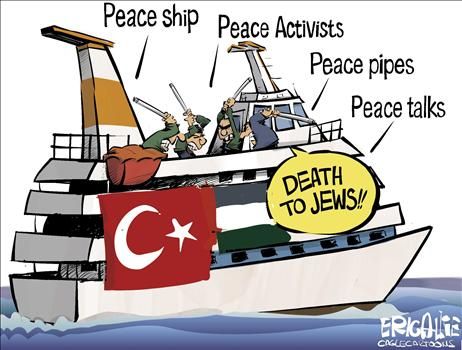
The "humanitarian" ships which sailed from Turkey could have come into Gaza any number of ways. The Red Cross has access to the strip as does Egypt, yet these group's insisted on creating an international incident by forcing their way through the Israeli blockade.

It is now confirmed that known terrorist's were on board these ships. Instead of condemning Israel right away, why not take a look at who these groups are? What is their real agenda? What are they trying to accomplish? The following video's shed some light on these groups and what they intend for the middle east and the rest of the globe.


Thursday, May 27, 2010

What lessons can be learned from Noah's Ark?

The Ark of Noah is a picture of Jesus Christ. It is the salvation from God’s righteous judgment. I have always been fascinated by the fact that there is only one door into the Ark, and God closed the door. In the New Testament Jesus calls himself the door. Jesus says in John Chapter 10, “ I am the door. If anyone enters by Me, he will be saved, and will go in and out and find pasture.” (Joh 10:9 NKJV) Just as there is only one door into the Ark, there is only one way to escape God’s judgment. Jesus said to him, "I am the way, the truth, and the life. No one comes to the Father except through Me." (Joh 14:6 NKJV) I especially liked the analogy Dr. Missler used when he said “All alternative theological speculations ended when the door shut.”

There were three groups of people represented by the Judgment in Genesis chapter 6.

· Those that perished in the Flood

· Those that were preserved through the Flood (Noah and his family)

· Those that were removed prior to the Flood (Enoch)

These three groups of people will be represented again, when God’s judgment comes upon the earth during the Great Tribulation.

· Those who perish in the Great Tribulation

· Those that are preserved through the Great Tribulation, (the remnant of the house of Israel)

· Those that are removed prior to the Great Tribulation, (believers who are taken in the rapture)

By the Grace of God I am praying to be in the group removed prior to the Great Tribulation. Jesus said, "Watch therefore, and pray always that you may be counted worthy to escape all these things that will come to pass, and to stand before the Son of Man." (Luk 21:36 NKJV)

He who testifies to these things says, "Surely I am coming quickly." Amen. Even so, come, Lord Jesus! (Rev 22:20 NKJV)

Tuesday, March 16, 2010

GOP LEADS “BACKLASH” AGAINST OBAMA ABOUT ISRAEL!

GOP LEADS “BACKLASH” AGAINST OBAMA ABOUT ISRAEL!: "

GOP LEADS BACKLASH AGAINST OBAMA; DEMOCRATS UNEASY!

by Tzvi Ben Gedalyahu (Arutz Sheva News)


Republican Party leaders attacked the Obama administration Monday with unusually harsh language, charging it with an “irresponsible” position against an ally. “In an effort to ingratiate our country with the Arab world, this administration has shown a troubling eagerness to undercut our allies and friends,” said the GOP’s only Jewish Republican Congressman, Eric Cantor of Virginia.


He went so far as to say that the dispute “jeopardizes America’s national security.”


Prime Minister Binyamin Netanyahu has taken the heat for the current crisis that erupted when a government minister announced the approval of the fourth of seven stages for building new homes for Jews in the Ramat Shlomo neighborhood. Totally Jewish, it is located in a part of Jerusalem that was restored to Israel in the Six Day War when Jerusalem was reunited, but not recognized as such by the United States.


The initial media and political blows were delivered to Prime Minister Netanyahu, who apologized to visiting U.S. Vice President Joe Biden for the timing of the announcement with his arrival that was aimed at promoting American-mediated talks between the Palestinian Authority and Israel for a new PA state.


However, U.S. Secretary of State Hillary Clinton followed up with an unprecedented and scathing public attack on the Prime Minister. Republican legislators did not miss a beat as most political commentators stated that Clinton ”over-reacted.”


Congresswoman Ileana Ros-Lehtinen, the leading Republican on the House Foreign Affairs Committee, charged that the Obama government’s condemnations of “an indispensable ally and friend of the United States…undermine both our allies and the peace process, while encouraging the enemies of America and Israel alike.”


She noted that President Obama has taken “softer approaches” towards the Palestinian Authority, Syria and Iran.


Senator Sam Brownback’s office stated, “It’ is hard to see how spending a weekend condemning Israel for a zoning decision in its capital city amounts to a positive step towards peace.”


Democrats also are uneasy over the crisis, which comes only eight months before Congressional elections. Polls have shown that President Obama’s political stature is sinking.


Laura Rozen of Politico.com wrote on Monday that Democratic legislators are looking for some kind of political leadership from U.S. Middle East envoy George Mitchell, who is a former senator and is President Obama’s ”make-or-break” representative in the PA-Israeli struggle.


She quoted a senior Democratic foreign policy leader as saying that the failure of top Obama officials and Mitchell to make contact with Congressmen is the “the same exact mistake of the first two Clinton years with majorities in both Houses. You’d think they would have learned the lesson of ‘never take your allies for granted’ at least after this year.”


Veteran Middle East peace negotiator Aaron David Miller told Rozen, “The tree they’re up on this one is very tall. Paradoxically, it may be up to Bibi [Prime Minister Binyamin Netanyahu] to help them climb down.”

"